The Future of Botanical Extraction: Precision Manufacturing, Sustainability and Global Supply

How Advanced Technology and Responsible Manufacturing Are Shaping the Next Generation of Botanical Ingredients
The botanical ingredient industry is entering a period of significant transformation.
For centuries, plants have been valued for their natural properties and their role in traditional wellness systems. Today, the nutraceutical industry is taking botanical innovation to a new level by combining traditional knowledge with advanced extraction technologies, scientific validation, and responsible manufacturing practices.
As global demand for natural health solutions continues to grow, ingredient manufacturers are facing a new challenge:
How can the industry deliver high-quality botanical extracts at scale while maintaining consistency, sustainability, and global quality standards?
The answer lies in the future of botanical extraction — a future built on precision manufacturing, technological advancement, and sustainable supply chains.
The Evolution of Botanical Manufacturing
Historically, botanical extraction focused primarily on separating valuable compounds from plant materials.
However, modern nutraceutical manufacturing requires much more than extraction capability.
Today, global buyers expect:
- Consistent active compound levels
- Reliable batch-to-batch performance
- Advanced quality testing
- Complete traceability
- Regulatory compliance
- Sustainable production practices
This shift has transformed botanical extraction from a traditional processing activity into a highly scientific manufacturing discipline.
The manufacturers leading this evolution are those investing in advanced technologies, quality systems, and continuous process improvement.
Precision Manufacturing: The New Standard for Botanical Quality
One of the biggest challenges in botanical ingredient production is natural variation.
Plant-based materials can differ due to:
- Geographic origin
- Climate conditions
- Cultivation practices
- Harvesting cycles
- Storage conditions
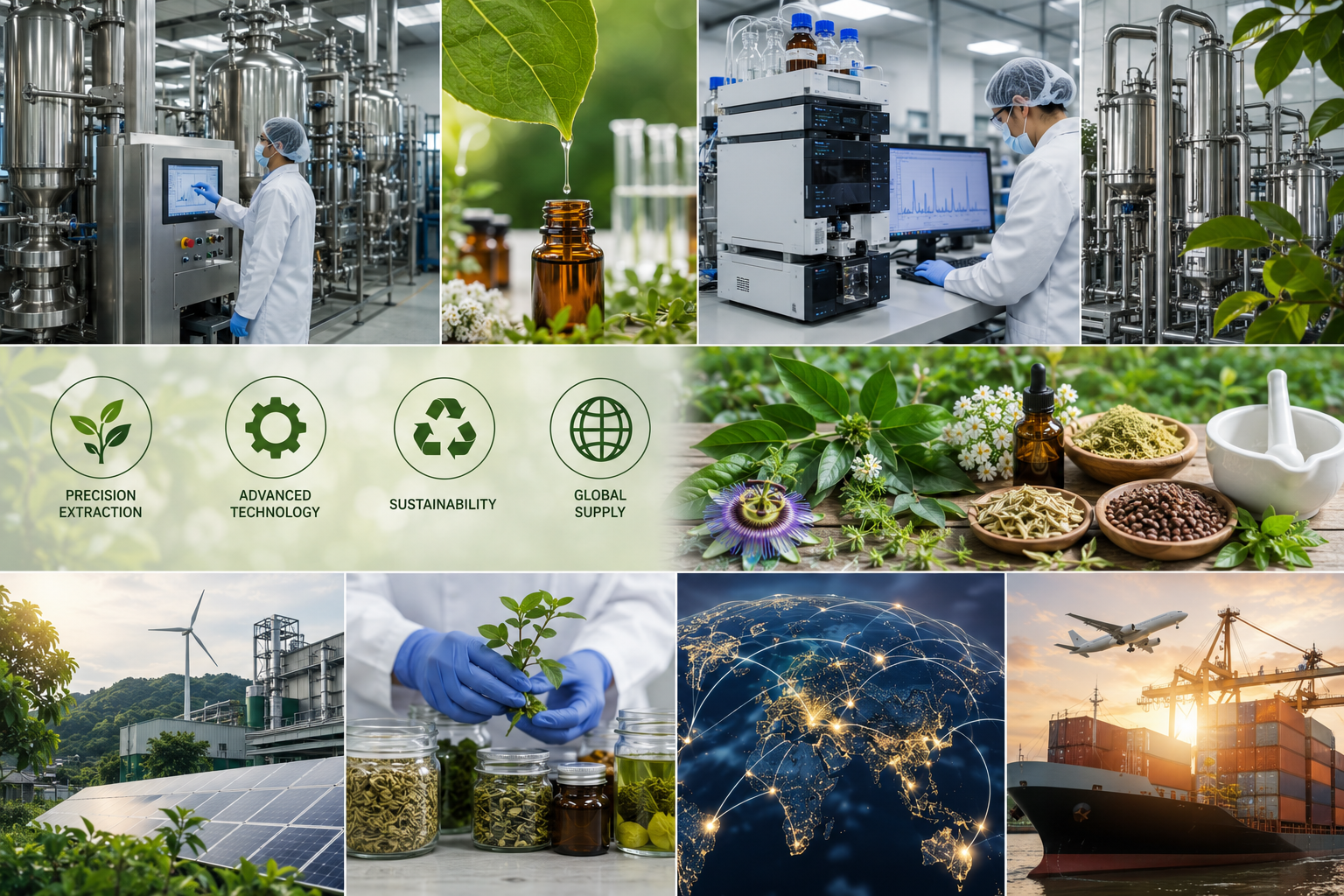
To overcome these challenges, modern manufacturers are adopting precision manufacturing approaches that provide greater control over every stage of production.
This includes:
- Standardized extraction processes
- Controlled operating conditions
- Automated monitoring systems
- Advanced analytical testing
- Data-driven quality management
Precision manufacturing allows botanical suppliers to deliver ingredients with predictable characteristics and consistent performance.
For nutraceutical brands, this reliability is essential when developing products for competitive global markets.
The Role of Advanced Extraction Technologies
Innovation in extraction technology is playing an important role in improving botanical ingredient quality.
Modern extraction methods focus on:
- Improving extraction efficiency
- Protecting valuable bioactive compounds
- Reducing processing variability
- Enhancing sustainability
- Improving scalability
Advanced technologies allow manufacturers to optimize processes while maintaining the natural integrity of botanical ingredients.
The goal is not simply to extract more compounds, but to create ingredients with better consistency, quality, and application potential.
Automation and Data-Driven Quality Systems
The future of botanical manufacturing will increasingly depend on automation and digital technologies.
Automated systems can help manufacturers monitor critical production parameters, improve process control, and reduce variations between batches.
Data-driven manufacturing enables:
- Real-time process monitoring
- Improved production efficiency
- Faster quality decisions
- Better traceability
- Enhanced documentation
For global nutraceutical companies, these capabilities provide greater confidence in ingredient supply and quality assurance.
As the industry becomes more sophisticated, technology will become a key differentiator among botanical ingredient manufacturers.
Sustainability: A Growing Priority in Botanical Supply Chains
Sustainability is becoming an essential consideration across the nutraceutical industry.
Consumers and brands are increasingly asking important questions:
- Where do ingredients come from?
- How are they processed?
- Are resources being used responsibly?
- Is the supply chain transparent?
Modern botanical manufacturers are focusing on sustainable practices such as:
- Responsible raw material sourcing
- Efficient resource utilization
- Waste reduction
- Improved solvent recovery systems
- Environment-conscious manufacturing processes
Sustainability is no longer only an environmental responsibility. It is becoming a critical part of long-term business strategy.
Building a Reliable Global Botanical Supply Network
The growth of the nutraceutical industry depends on strong and dependable supply chains.
Global customers require ingredient partners who can provide:
- Consistent production capacity
- International quality standards
- Regulatory documentation
- Supply reliability
- Technical support
A successful global supplier must combine manufacturing expertise with strong supply chain management.
From sourcing botanical materials to delivering finished extracts, every stage must be carefully controlled.
Traceability and transparency will continue to become important factors in supplier selection.
The Future Opportunity for Botanical Ingredient Manufacturers
The next decade will create significant opportunities for manufacturers who can successfully combine:
- Scientific innovation
- Manufacturing excellence
- Sustainability
- Global compliance
- Customer-focused solutions
Botanical ingredients such as Curcumin, Bacopa, and Piperine demonstrate how traditional plant-based solutions can evolve into globally recognized nutraceutical ingredients through research, technology, and quality systems. The future of botanical extraction will not be defined only by production capacity. It will be defined by the ability to create trusted, sustainable, and scientifically validated ingredients.
Looking Ahead
The botanical industry is moving toward a future where nature and technology work together.
Precision manufacturing will improve consistency. Advanced extraction methods will unlock greater potential. Sustainable practices will strengthen global supply chains.
For manufacturers, formulators, and nutraceutical brands, this evolution represents a new opportunity — to create products that meet the growing expectations of modern consumers.
The future of botanical extraction belongs to companies that can transform natural resources into reliable, responsible, and innovative ingredients.
Because the next generation of botanical excellence will be built not only on what we extract from nature, but on how responsibly and precisely we bring it to the world.